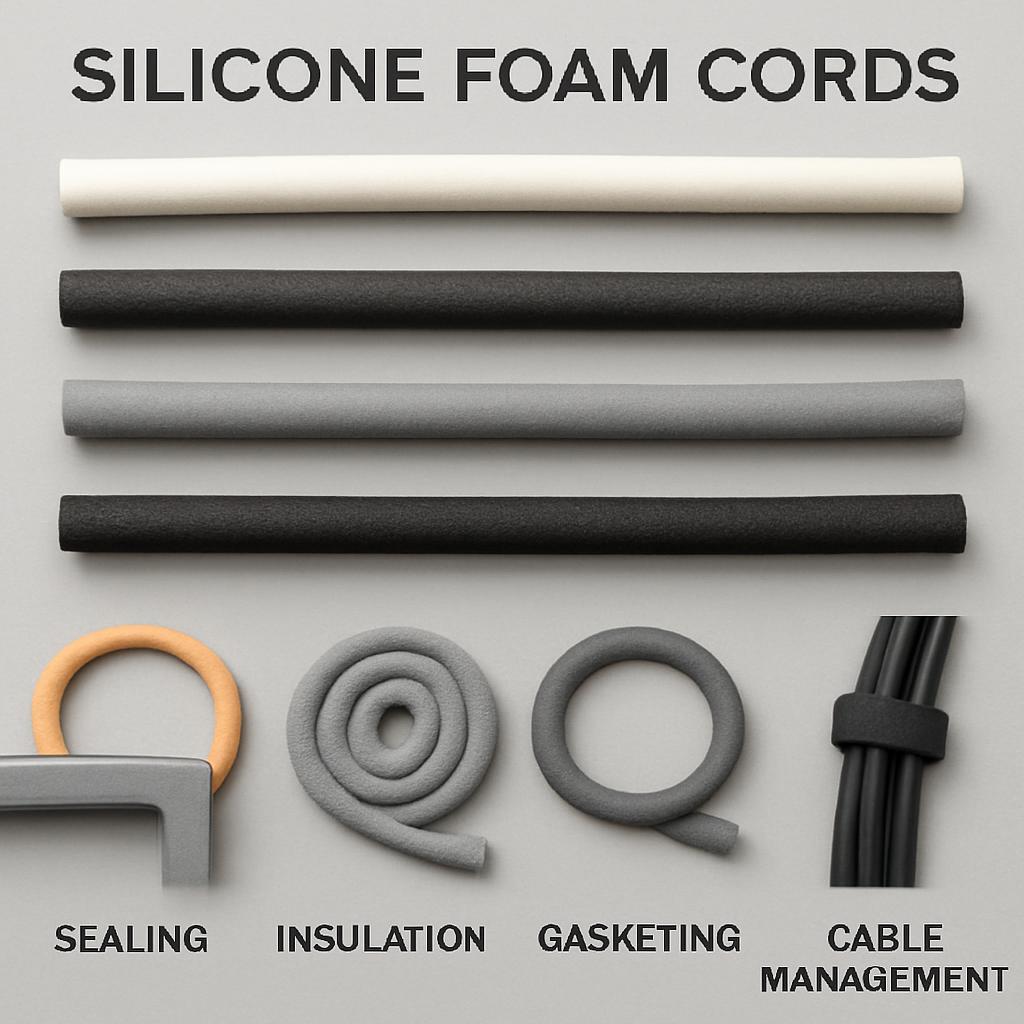
Silicone foam cords – a complete guide to density grades and applications
Foamed silicone cords are versatile sealing elements that offer flexibility and resistance to extreme conditions, making them the ideal choice for many industrial applications. By selecting the appropriate density grade, they can be tailored to the specific requirements of various sectors. Thanks to their insulating and thermal properties, silicone cords are ideal wherever sealing is required whilst maintaining high hygiene standards.
How do silicone foam cords compare in density classes?
Silicone foam cords are classified into four main density grades: soft, medium, firm, and extra firm, which directly influences the required compression force for sealing. Each density class serves a specific function, depending on the application and surface irregularities that need to be compensated for. For instance, a medium density cord may be ideal for general sealing, while a firm cord is better suited for heavy-duty applications.
Does the cellular structure of silicone foam cords affect their performance?
Yes, the closed-cell structure of silicone foam cords significantly enhances their performance by ensuring near-zero water absorption and excellent insulation properties. This structural characteristic allows them to maintain effectiveness in various environments, including those that require thermal and acoustic insulation. The closed-cell design is particularly beneficial in applications that demand moisture resistance.
When should silicone foam cords be used in temperature-critical applications?
Silicone foam cords are designed to operate effectively within a temperature range of -60°C to +200°C, while specialized versions can withstand temperatures up to +250°C. This broad thermal range makes them essential in industries like food processing and machinery, where exposure to extreme temperatures can compromise seals made from other materials. For example, using a silicone foam cord in an autoclave guarantees reliability during high-heat sterilization processes.
How important is compliance with industry standards for silicone foam cords?
Compliance with industry standards is critical for silicone foam cords, particularly in regions like Poland, where certifications such as PZH (for drinking water contact) and FDA (for food and pharmaceutical industries) are mandatory. These certifications ensure that the materials meet strict safety and hygiene regulations, allowing their use in sensitive environments without compromising quality. For instance, cords used in food processing must pass rigorous safety tests.
Why are silicone foam cords beneficial for outdoor applications?
Silicone foam cords offer high resistance to UV rays and ozone, making them well-suited for outdoor use. This durability ensures that they do not degrade when exposed to harsh environmental conditions, thus providing a reliable sealing solution for outdoor lighting fixtures and other external systems. Their long-lasting nature significantly reduces the need for frequent replacements.
Which factors contribute to the shape memory of silicone foam cords?
The shape memory of silicone foam cords is influenced primarily by their low compression set properties. This means that after prolonged compression, they can return to their original form, ensuring lasting seals over time. This characteristic is crucial in maintaining effective seals in applications that require consistent compression, such as in control panels and industrial machines.
| Density Class | Compression Force Needed | Typical Applications |
|---|---|---|
| Soft | Low | General sealing, light-duty applications |
| Medium | Moderate | Standard industrial uses |
| Firm | High | Heavy-duty industrial applications |
| Extra Firm | Very High | Extreme conditions and high-pressure environments |
Silicone foam cords are integral components in many industries due to their adaptability and high-performance characteristics. When choosing the appropriate cord, it is essential to consider factors such as density, temperature tolerance, and compliance with industry standards to achieve optimal sealing solutions.