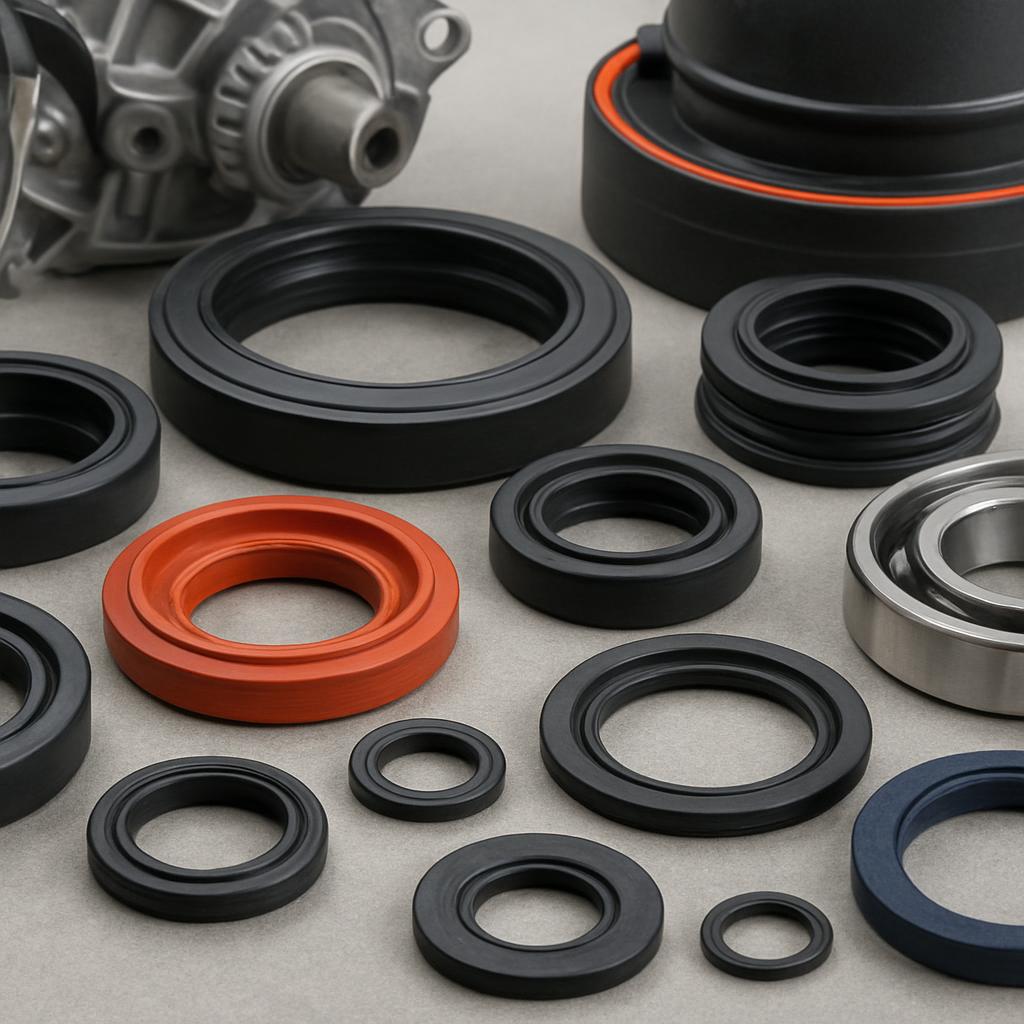
Rubber seals in industry – from automotive to food processing
Rubber seals are essential in various industries in Poland, including automotive and food processing. This article explores their material diversity, production methods, and regulatory compliance, highlighting the significance of proper selection for each application.
How do rubber seals differ between industries?
Rubber seals vary significantly in their requirements and applications across different sectors. In the automotive industry, durability and resistance to fluids are paramount, while the food processing sector prioritizes microbiological safety and compliance with health regulations. For instance, EPDM is typically used for automotive applications, providing weather resistance, whereas silicone seals are preferred in the food industry due to their safety ratings.
Why are specific certifications crucial for rubber seals in food processing?
Certifications for rubber seals in food processing are critical to ensuring safety and compliance with regulations. Seals in contact with food must meet stringent guidelines, such as the PZH certificate and EU regulation WE 1935/2004. These certifications guarantee that the materials used do not alter the taste, odor, or chemical composition of food products, which is essential for consumer safety.
Which materials are most commonly used in rubber seals?
The most commonly used materials for rubber seals in Polish industries include EPDM, NBR, FKM/Viton, and silicone. Each material offers unique properties suited for specific applications, such as oil and fuel resistance in NBR or high-temperature resilience in FKM. This diversity allows manufacturers to select the best elastomer for their needs, optimizing performance and longevity.
When are advanced production methods employed for rubber seals?
Advanced production methods are employed when high precision and efficiency are required. Techniques such as injection molding and extrusion dominate the manufacturing landscape in Poland. Injection molding is used for producing complex shapes in high volumes, while extrusion is preferred for continuous profiles. These methods ensure consistent quality and performance of rubber seals in various applications.
How does chemical resistance impact the selection of rubber seals?
Chemical resistance significantly impacts the selection of rubber seals, especially in heavy and chemical industries. The resistance to swelling and degradation is crucial for maintaining the integrity of seals. For example, using NBR in environments containing acids can lead to failure and operational problems. Therefore, choosing the right elastomer based on the chemicals present is vital for operational success.
What role does eco-design play in rubber seal manufacturing?
Eco-design is becoming increasingly important in rubber seal manufacturing, with a focus on materials that can be fully recycled. This trend is particularly evident with the rise of thermoplastic elastomers (TPE), which offer environmental benefits compared to traditional rubber. Manufacturers are embracing TPE not only to reduce waste but also to meet growing consumer and regulatory demands for sustainable products.
| Material | Key Properties | Common Applications |
|---|---|---|
| EPDM | Weather-resistant, durable | Automotive seals, outdoor applications |
| NBR | Oil-resistant, good tensile strength | Automotive fuel systems, hydraulic applications |
| FKM/Viton | High-temperature resistance, chemical-resistant | Aerospace, chemical processing |
| Silikon | Temperature stability, non-toxic | Food industry, medical applications |
Rubber seals are integral components in various industrial sectors in Poland, emphasizing the importance of selecting the right materials and certifications to ensure safety, efficiency, and environmental responsibility. The continuous evolution in production methods and materials, including the shift toward eco-friendly solutions, reflects the industry’s commitment to quality and sustainability.