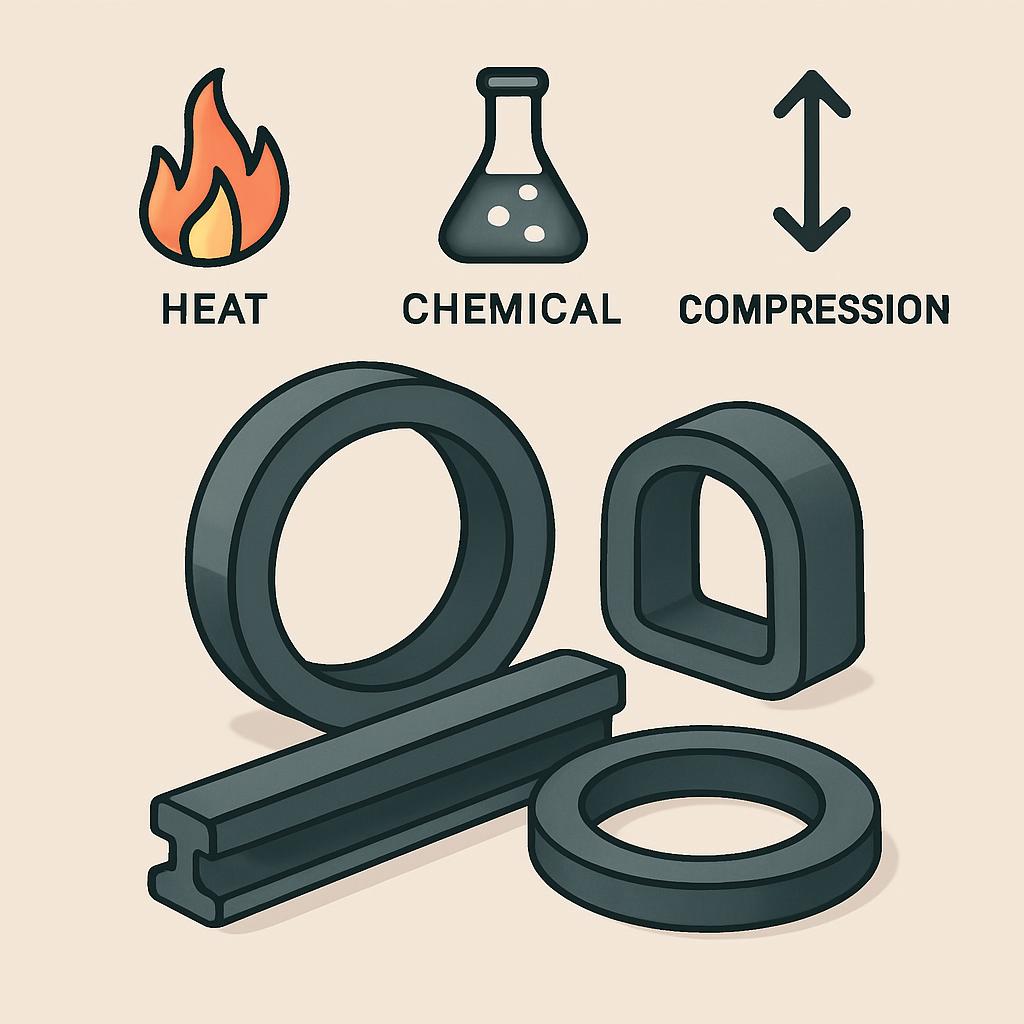
Ranking rubber seals & gaskets – which options handle heat, chemicals, and compression best?
In the world of mechanical engineering and industrial applications, selecting the right rubber seals is critical for ensuring optimal performance and longevity. Understanding how different materials handle heat, chemicals, and compression can significantly impact the efficiency and durability of your applications.
Understanding Rubber Seals and Gaskets
Rubber seals and gaskets are essential components used to prevent leaks and protect against contamination. Their primary role is to create a barrier between two surfaces, ensuring that liquids and gases do not escape or enter undesired areas. The performance of these seals is heavily influenced by the type of material used, especially when faced with varying temperatures and chemical exposures.
Heat Resistance
When it comes to heat resistance, not all rubber seals are created equal. Selecting a material that can withstand high temperatures is crucial for applications in automotive, aerospace, and industrial machinery settings. Common materials and their heat resistance capabilities include:
- Silicone Rubber: Known for its excellent heat resistance, silicone can typically withstand temperatures up to 300°C (572°F). This makes it ideal for high-temperature applications.
- Nitrile Rubber (Buna-N): While it offers good thermal stability, it is usually limited to approximately 120°C (248°F). Nonetheless, it finds applications in oil and fuel contact settings.
- EPDM (Ethylene Propylene Diene Monomer): Excellent for automotive applications, it can handle temperatures ranging from -50°C to 150°C (-58°F to 302°F).
Chemical Resistance
Another critical factor in the performance of rubber seals is their ability to withstand various chemicals. Choosing the wrong material for high-corrosive environments can lead to premature failure and costly repairs. Here’s how some materials fare in this regard:
- Fluoroelastomer (FKM): This material has exceptional resistance to oils, fuels, and solvents, making it a popular choice for industries requiring exposure to harsh chemicals.
- PTFE (Polytetrafluoroethylene): Known for its non-stick properties, PTFE has the highest level of chemical resistance and can be combined with other materials for improved mechanical strength.
- Nitrile Rubber: As mentioned earlier, while it excels with oils and fuels, it may degrade in the presence of certain solvents and ozone.
Compression Set Resistance
Compression set is an important property in determining how well a rubber seal can maintain its shape after prolonged compression. A high compression set can lead to failures in seal integrity over time. Here are some materials that exhibit better compression set properties:
- Silicone Rubber: It has a low compression set, meaning it can return to its original shape more easily after compression, making it suitable for dynamic applications.
- EPDM: This material has great recovery properties and maintains its flexibility, even when compressed for extended periods.
- Nitrile Rubber: While effective in many applications, it generally has a higher compression set compared to silicone and EPDM.
Choosing the Right Material for Your Application
When selecting rubber seals for specific applications, it is essential to analyze the environmental conditions they will encounter. Take into account the temperature ranges, potential chemical exposures, and the mechanical stresses they will face. By doing so, you are more likely to choose a rubber seal that offers optimal performance and longevity.
It is also advisable to consider the trade-offs. For instance, while silicone provides excellent high-temperature stability, its mechanical strength may be lower compared to nitrile. Thus, understanding the specific requirements of your application is key to making a well-informed decision.
Innovations in Rubber Seal Technology
The industry is witnessing numerous innovations aimed at enhancing the performance of rubber seals. Advancements in formulation chemistry and manufacturing techniques are helping create materials that further excel in heat, chemical, and mechanical properties. Some emerging trends include:
- Energy-Efficient Manufacturing: Techniques that reduce waste and enhance material capabilities, thereby ensuring a better product is produced with a lower environmental impact.
- Nanocomposites: Incorporating nanomaterials into rubber compounds can boost their strength, thermal stability, and chemical resistance.
- Recycling and Sustainability: The move towards sustainable materials is gaining traction, with many manufacturers looking to create recycled rubber options that still retain high performance.
Conclusion: The Importance of Knowledge in Selection
In summary, having a thorough understanding of rubber seal properties can greatly enhance the reliability and effectiveness of your applications. Investing time in selecting the appropriate material can prevent future production interruptions and reduce maintenance costs.