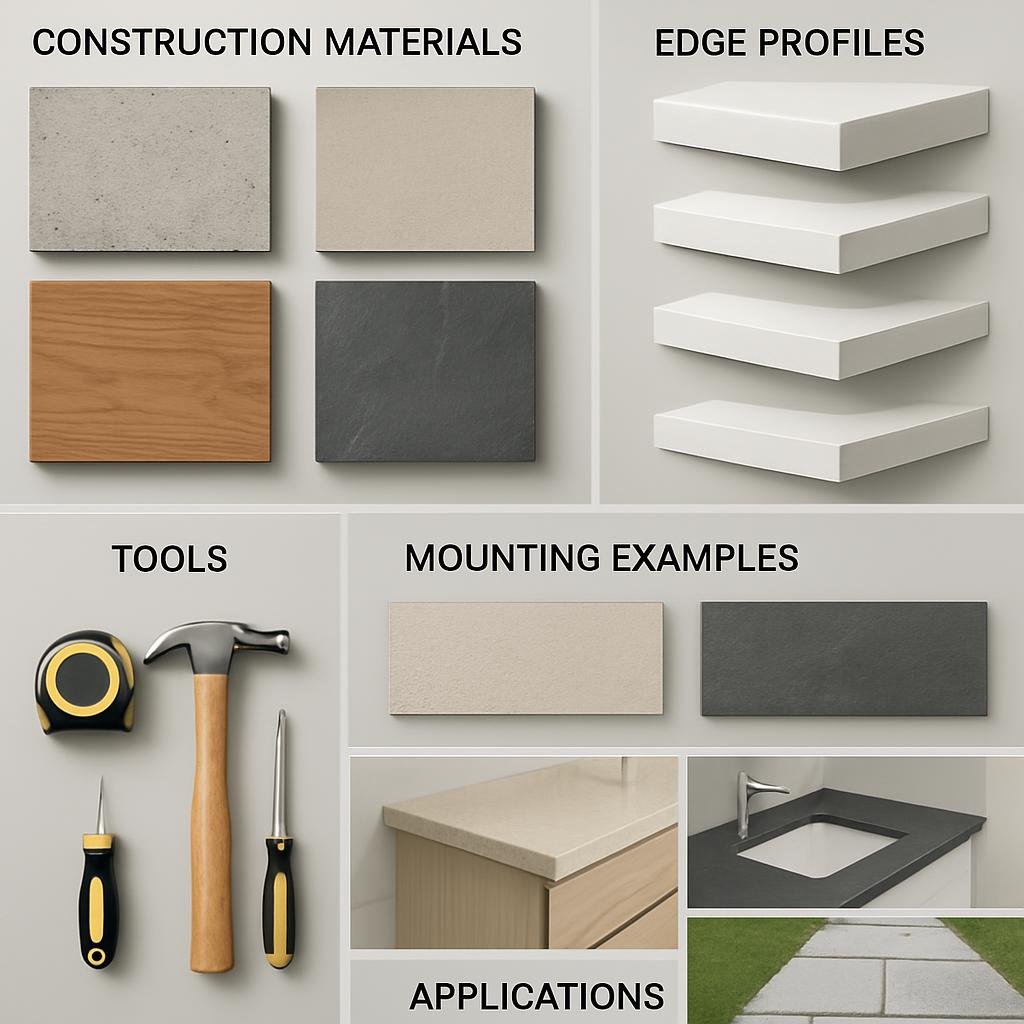
Edge profiles – a complete guide to construction, mounting and applications
Edge profiles are essential finishing elements in construction and furniture design, providing both protective and aesthetic functions. Made from various materials, such as aluminum and stainless steel, these profiles safeguard edges of materials like tiles and panels while improving overall design appeal.
How are edge profiles constructed?
Edge profiles are typically made from durable materials including aluminum, stainless steel, brass, and PVC. The choice of material significantly influences their corrosion resistance and mechanical durability. For instance, aluminum is often used in residential settings, while stainless steel is preferred in environments such as the food industry due to its robustness and resistance to corrosion.
Why are edge profiles important for material protection?
Edge profiles play a crucial role in protecting the edges of construction materials from chipping and masking uneven cuts. This is especially important for external corners where aesthetics and durability are paramount. By effectively masking these imperfections, edge profiles enhance the overall finish of the installation, ensuring a refined look.
When should different types of edge profiles be used?
Different edge profiles, including L-profiles, J/C-profiles, and T-profiles, should be selected based on the specific application and the requirements of the finishing project. For example, L-profiles are commonly used for corners, while T-profiles are ideal for joining two surfaces at the same level. Choosing the right type ensures structural integrity and aesthetic appeal.
Which mounting methods are preferred for edge profiles?
Edge profiles can be installed using two main methods: mechanical mounting and surface mounting. Mechanical mounting involves embedding a perforated wing of the profile in adhesive mortar during surface installation, whereas surface mounting utilizes construction adhesives or self-adhesive tapes, particularly for renovation profiles. The choice of method can affect installation speed and profile performance.
How do edge profiles assist in thermal expansion scenarios?
In modern constructions, edge profiles serve a dilatational function, accommodating materials with varying thermal expansion rates. For instance, when combining ceramic tiles and wooden flooring, edge profiles can efficiently mitigate stress caused by expansion and contraction, thus preventing cracks and damage over time.
How to ensure safety with specialized edge profiles?
Specialized edge profiles, such as stair nosings, incorporate features like anti-slip inserts or grooves to enhance user safety in public utility buildings. Compliance with safety standards, such as Polish BHP regulations, is essential to mitigate risks in high-traffic areas and ensure a secure environment for users.
| Material | Corrosion Resistance | Typical Applications |
|---|---|---|
| Aluminum | High | Residential interiors, bathrooms |
| Stainless Steel | Very High | Commercial kitchens, outdoor settings |
| Brass | Medium | Decorative applications |
| PVC | Medium to Low | Budget projects, interiors |
For further insights into edge profiles, you can explore edge profiles that offer specialized solutions for various applications.